
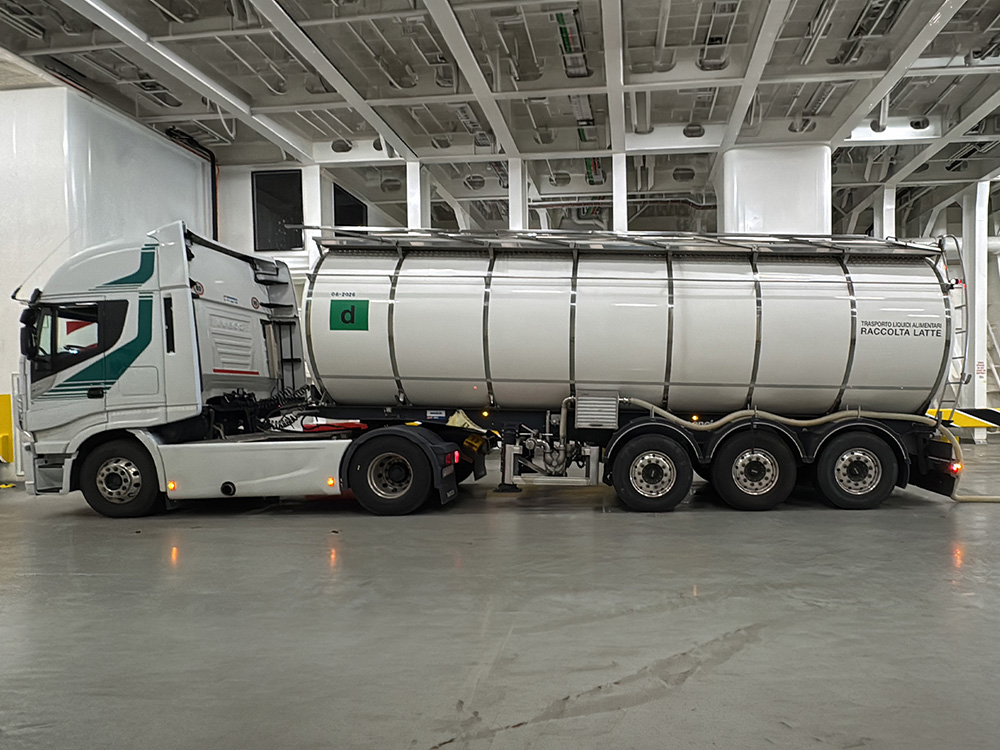
28 Apr Tank Sanitisation: How It Works and Why It Is Essential in Food Liquid Transport
Tank sanitisation is an essential step in the transport of food-grade liquids. Milk, wine, water, oil and plant-based beverages are sensitive products that require controlled hygienic conditions at all times. Even a minimal residue can compromise quality and safety, making rigorous and consistent procedures indispensable.
For this reason, every transport must be preceded by washing and inspection operations to ensure the tank is suitable for the new load.
Why Tank Sanitisation Is So Important
In food transport, the tank comes into direct contact with the product. This means that every internal surface must be perfectly clean and free from contamination. Proper sanitisation makes it possible to:
- prevent cross-contamination between different products
- preserve the organoleptic characteristics of the product
- comply with health and hygiene regulations
- ensure safety throughout the entire supply chain
This is therefore a fundamental step, not only from a technical standpoint, but also from a regulatory one.
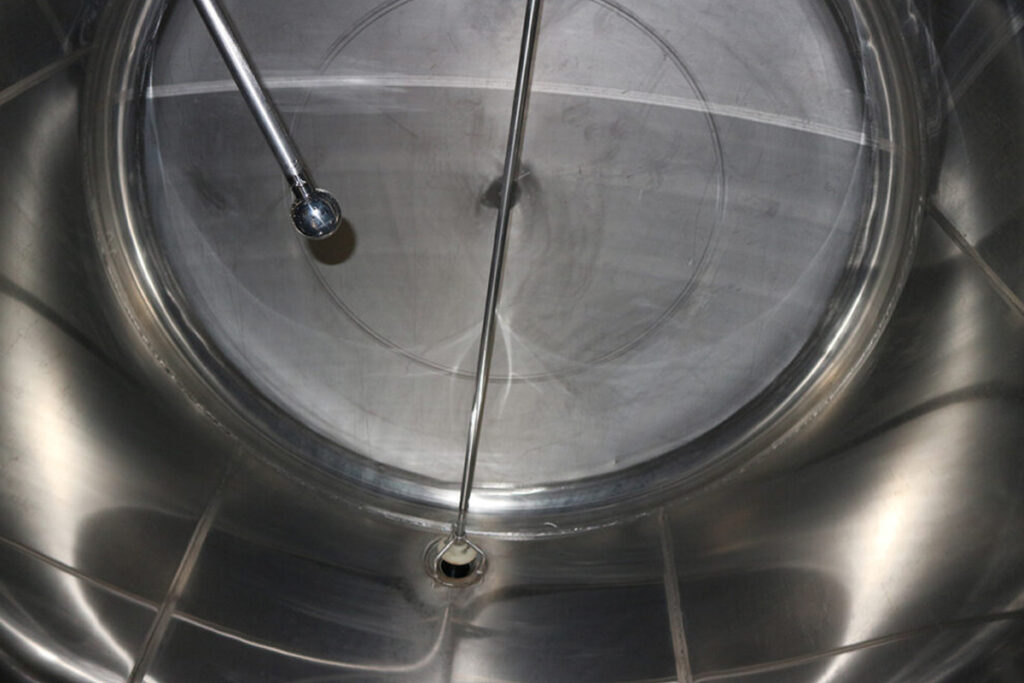

How Tank Cleaning and Sanitisation Works
Food-grade transport tanks are washed after every unloading, through specific procedures that can be either manual or automated. One of the most widely used systems is CIP washing (Clean In Place), which allows the interior of the tank to be cleaned without disassembling its components. The process involves washing cycles using water and suitable detergents, followed by rinsing and disinfection.
Operations can be carried out at authorised facilities or in dedicated areas, in compliance with current regulations. Upon completion, checks are performed to verify the effectiveness of the sanitisation.
Inspections, Hygiene Standards and Regulations for Tank Sanitisation
After cleaning, the tank undergoes checks to ensure it is ready for its next use. These inspections include organoleptic tests, which are useful for detecting any residues or anomalies.
Tanks used in the transport of food-grade liquids are also designed to facilitate cleaning and reduce the risk of contamination, thanks to materials such as stainless steel and specific construction solutions. Compliance with hygiene standards is an integral part of the service and helps ensure quality and safety throughout the entire transport process.
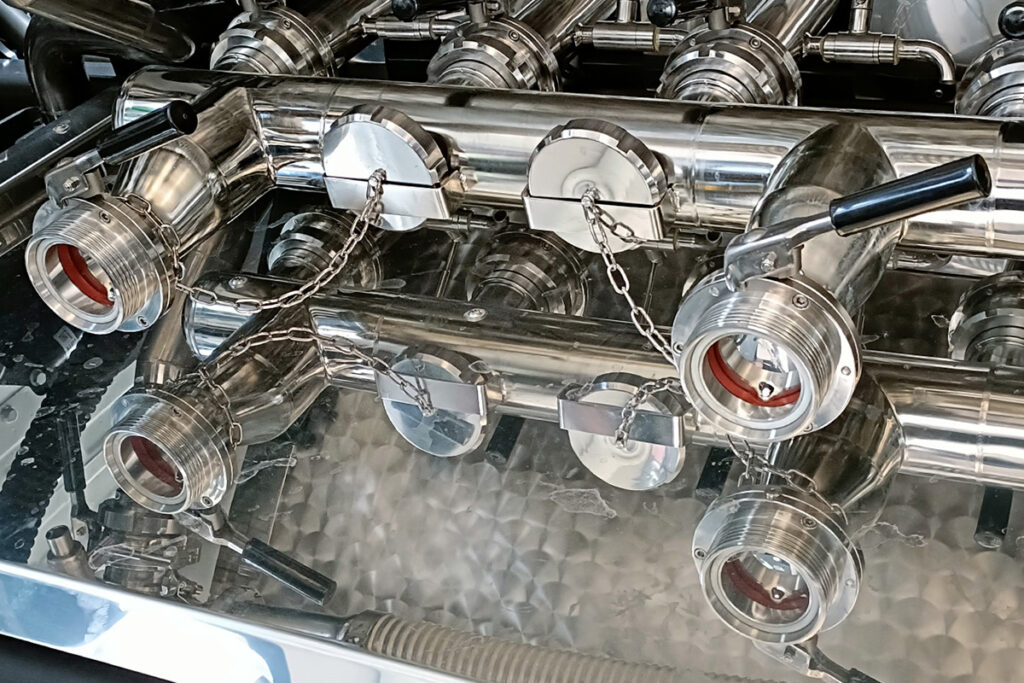
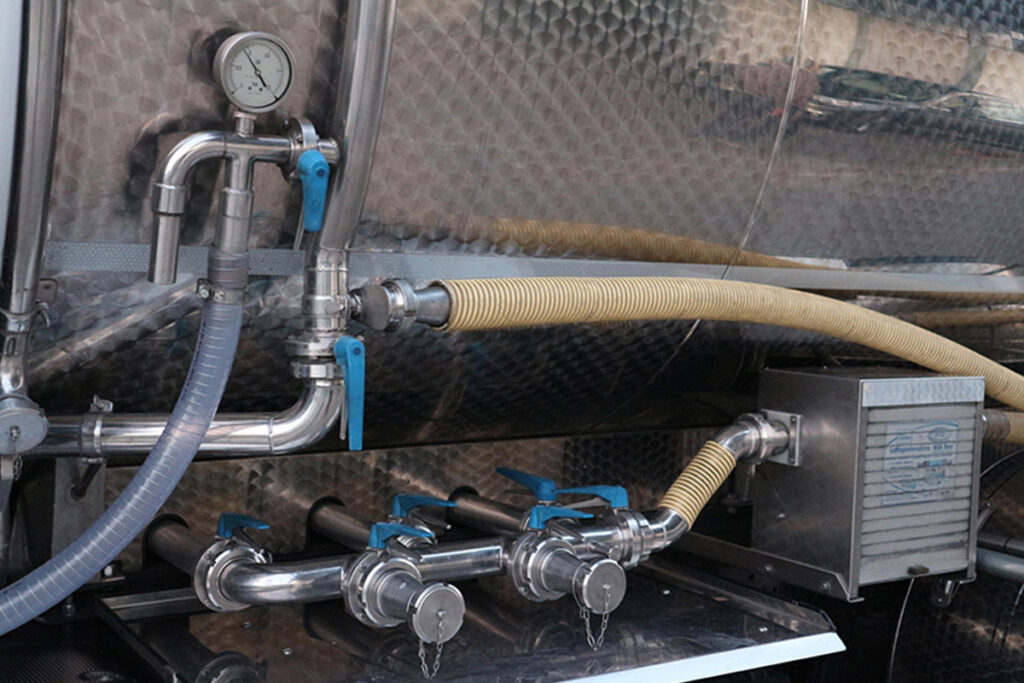
Sanitisation procedures are part of the protocols required by food safety regulations, including the HACCP system. Every operation must be traceable and documented, so as to guarantee transparency and compliance. This applies in particular to the transport of products such as milk and dairy derivatives, where checks are even more stringent.
Autotrasporti Marangon’s Approach
Autotrasporti Marangon manages tank sanitisation as an integral part of its food liquid transport service. After every unloading, vehicles undergo thorough washing and inspection, carried out at authorised facilities or in dedicated areas.
The tanks, made of stainless steel and designed for food contact, are monitored to ensure consistently hygienic conditions. This approach allows operations to be carried out safely and maintains high quality standards throughout the entire supply chain.