
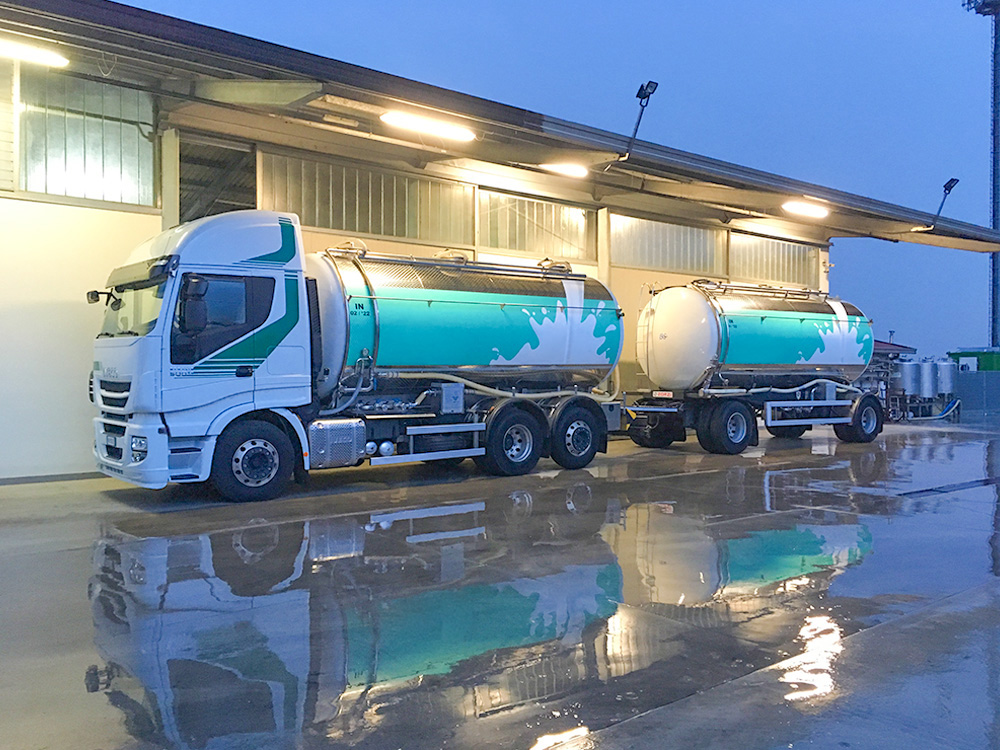
28 Apr Milk transport: from collection on farms to the dairy
Milk transport is one of the most delicate operations in the food liquid sector. From the collection phase at farms to delivery at dairies and creameries, every operation must be managed following precise procedures, in compliance with hygiene and health regulations and product quality standards.
Raw milk is particularly sensitive to temperature variations and contamination. For this reason, milk collection and transport require specific vehicles, constant monitoring and an organised logistics management.
How milk collection works on farms
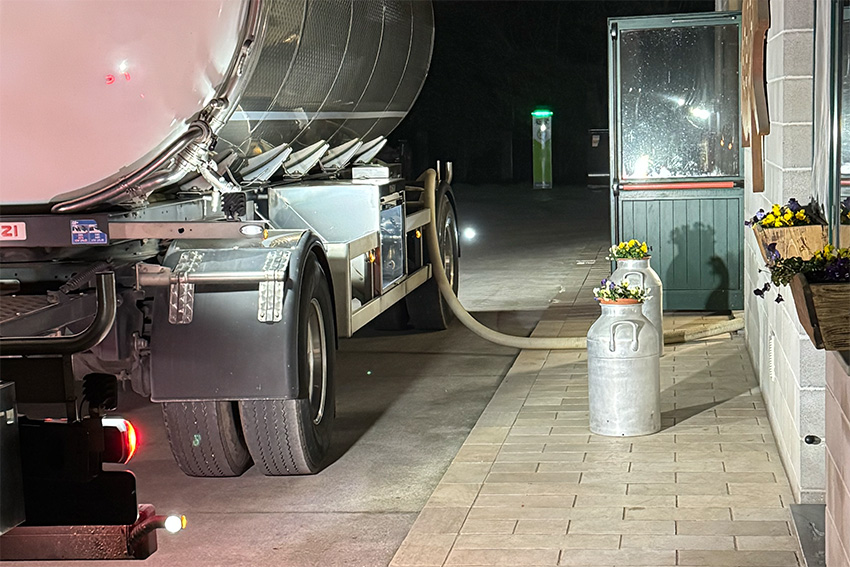
Milk collection is organised daily through planned routes, which allow farms to be reached and the product to be transferred to processing plants within the required timeframes.
During collection, the first quality checks are carried out directly at the farm. Operators assess the condition of the milk and proceed with sampling operations, necessary for subsequent analysis. All documentation is checked and recorded, ensuring traceability throughout the entire supply chain.
This phase is fundamental as it represents the first quality check on the product intended for processing.
Why milk transport requires dedicated procedures
Milk must be transported under stable conditions, avoiding temperature fluctuations, contamination and excessive movement that could alter its characteristics.
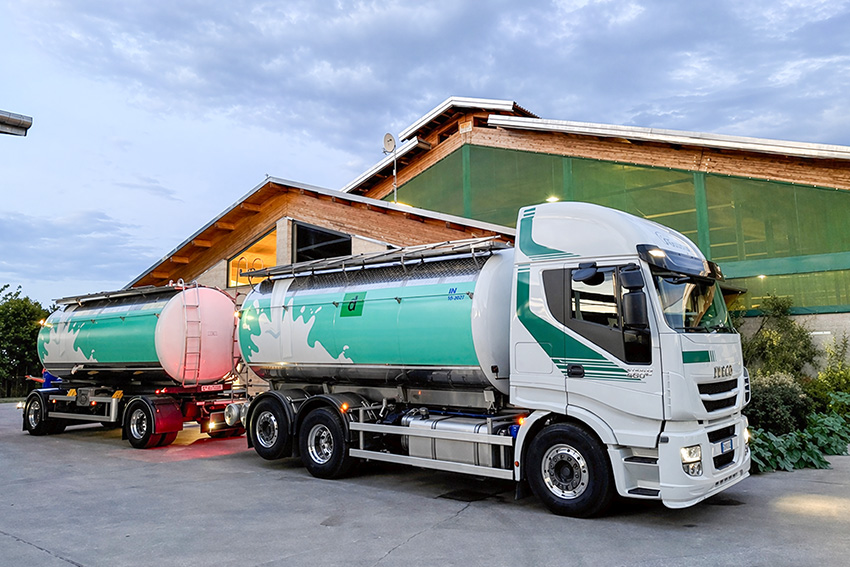
For this reason, milk tanker transport is carried out using tankers specifically designed for the food sector. Operating procedures follow rigorous standards covering every phase: from loading to unloading, including equipment cleaning and temperature monitoring.
Journey times and route planning also play an important role in maintaining product quality.
Milk transport tankers: features and safety
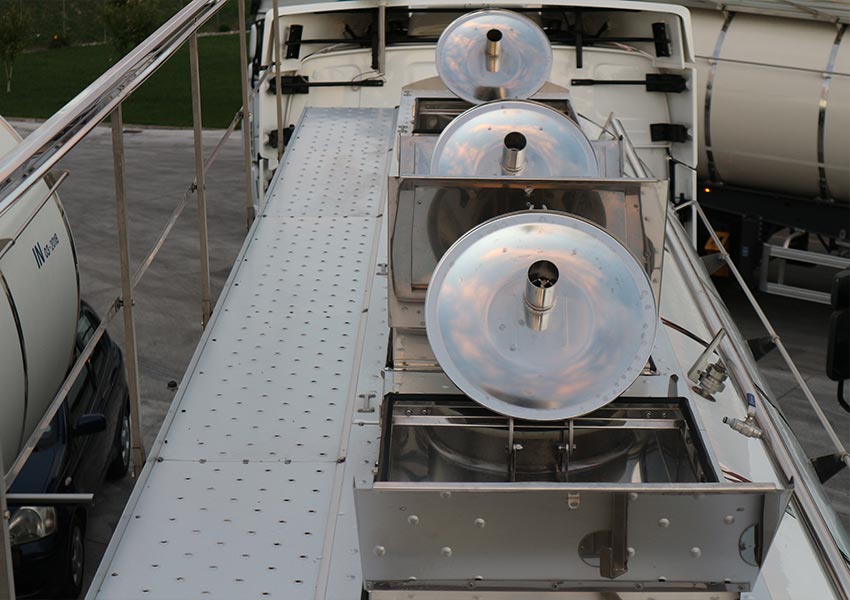
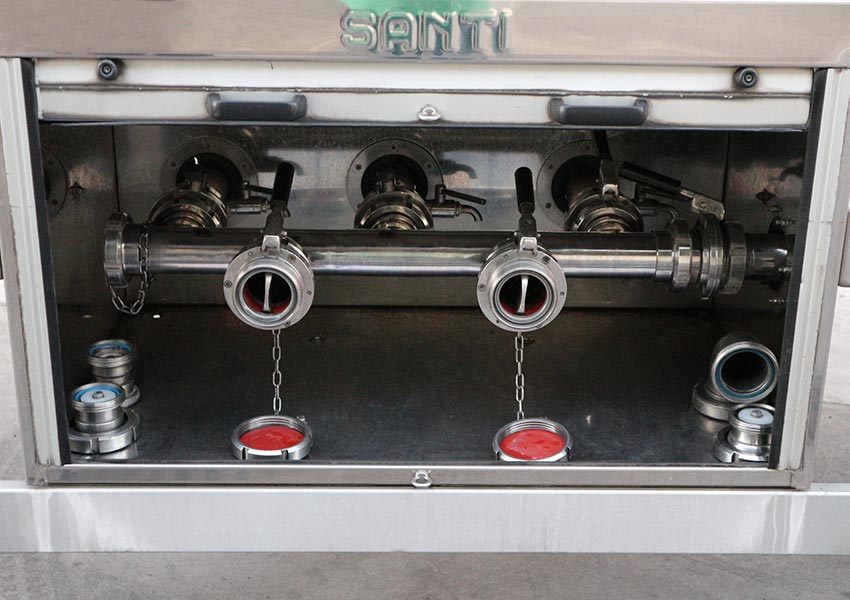
Milk transport tankers are made of stainless steel and fitted with thermal insulation to keep the product in optimal conditions during transit. The tanks can be divided into multiple sealed compartments and are equipped with pumping systems and instruments for sample collection.
Before each use, the tankers undergo specific washing and sanitisation procedures, essential for ensuring high hygiene standards. Cleaning and inspection operations are an integral part of the service and help preserve the integrity and safety of the transported milk.
From delivery to milk processing
Once collection is complete, the milk is delivered to dairies, creameries and processing plants, where it will be processed or used for the production of dairy derivatives.
Punctual delivery is an essential factor, as it allows plants to correctly manage production processes and maintain high quality standards throughout the dairy supply chain.
Autotrasporti Marangon’s experience in milk transport
Autotrasporti Marangon has been operating in milk collection and transport for over 45 years, working with farms, dairies and processing plants across Italy and Europe.
The company uses insulated tankers and dedicated vehicles, managed by qualified personnel and constantly monitored through maintenance, sanitisation and quality control procedures. The logistics organisation allows every transport to be planned with precision, ensuring operational continuity and reliability throughout the entire supply chain.